

Losing a tooth can affect more than the appearance of your smile. Depending on the location of the gap, it may also make eating or speaking more difficult and allow surrounding teeth to move over time.
Dental implants and bridges are two of the most common fixed tooth replacement options, but they work in very different ways.
A bridge uses the surrounding teeth to support a replacement tooth, while an implant is placed into the jawbone and supports a crown independently. Neither option is automatically better for every patient.
This comparison explains the benefits and considerations of dental implants vs bridges to help you prepare for a conversation with your dentist.
What Is a Dental Implant?
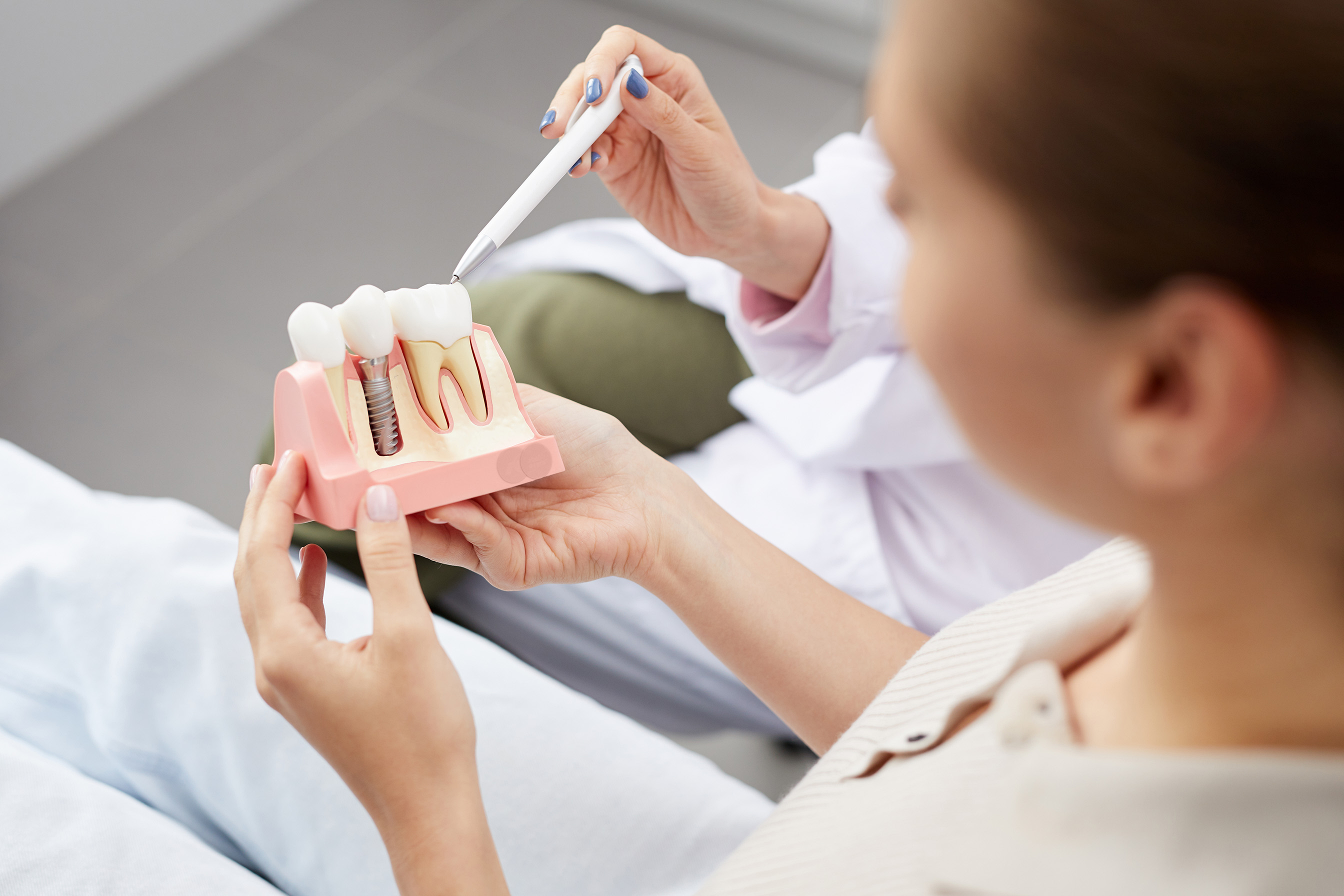
A dental implant is usually a titanium post placed into the jawbone where the tooth root previously sat. After the area has healed, the implant can support a crown designed to look and function like a natural tooth.
Implants can replace one tooth, several teeth or support a denture.
One of their main advantages is that they do not normally require healthy neighbouring teeth to be filed down for support. They also transmit biting forces into the jawbone in a way that is similar to a natural tooth root.
However, implant treatment involves minor surgery and a healing period. Patients also require sufficient healthy bone and gums, although additional procedures may sometimes make treatment possible.
Staina House Dental Practice works with local specialists to provide private implant dentistry in Lancashire, with treatment planned according to each patient’s oral health, bone levels and individual needs.
What Is a Dental Bridge?
A dental bridge replaces a missing tooth by spanning the gap between the surrounding teeth.
The artificial tooth is known as a pontic, while the supporting teeth are called abutment teeth. Traditional bridges usually involve placing crowns over one or both neighbouring teeth.
Other designs include resin-bonded bridges, which may be attached to the back of a neighbouring tooth with less preparation, and cantilever bridges supported from one side.
Staina House Dental Practice offers different bridge styles and assesses which design is appropriate for the location of the gap and condition of the surrounding teeth.
Dental Implants vs Bridges: Quick Comparison
| Consideration | Dental implant | Dental bridge |
|---|---|---|
| Support | Placed into the jawbone | Supported by neighbouring teeth |
| Effect on nearby teeth | Usually no preparation required | Traditional bridges require supporting teeth to be prepared |
| Treatment time | Often several months | Usually completed more quickly |
| Surgery | Required | Usually not required |
| Initial cost | Generally higher | Usually lower |
| Cleaning | Brushed and cleaned around like a tooth | Requires cleaning beneath the bridge |
| Bone requirements | Sufficient healthy bone is needed | Does not require an implant site |
| Longevity | Can be a long-term solution with good care | Can also last many years with good maintenance |
Benefits of Dental Implants
Dental implants may be particularly suitable when the teeth beside the gap are healthy.
Their potential benefits include:
- No need to prepare healthy adjacent teeth
- A secure, fixed replacement
- Natural-looking appearance
- Strong biting function
- Support for the jawbone around the implant
- The ability to replace one or several teeth
Implants are often described as permanent dental solutions, but this should not be taken to mean they are guaranteed to last for life. The implant, crown, gums and surrounding bone all require ongoing care.
Long-term success depends on effective cleaning, healthy gums, regular dental reviews and factors such as smoking and general health. The British Society of Periodontology advises that implants require continuing maintenance and can develop problems if plaque accumulates around them.
Considerations With Dental Implants
Dental implants are not suitable for everyone.
Factors to consider include:
- Treatment involves a surgical procedure.
- Healing can take several months.
- Bone grafting may sometimes be required.
- The initial cost is normally higher than a bridge.
- Gum health must be stabilised before treatment.
- Good daily cleaning remains essential.
An implant assessment may include examination of the teeth and gums, X-rays or scans and a review of your medical and dental history.
Benefits of Dental Bridges
A bridge can provide an effective missing teeth replacement without placing an implant into the jaw.
Potential advantages include:
- No implant surgery
- A shorter treatment process
- A lower initial cost in many cases
- A fixed replacement that is not removed at night
- Natural-looking materials and shades
- A useful option when the neighbouring teeth already need crowns
A traditional bridge can be especially appropriate if the teeth beside the gap are heavily filled, damaged or already require restorative treatment.
Considerations With Dental Bridges
The main disadvantage of a traditional bridge is that the supporting teeth usually need to be reshaped for crowns.
This may be less desirable when those teeth are completely healthy.
Other considerations include:
- The health of the supporting teeth affects the bridge.
- Special floss or interdental cleaning is needed beneath it.
- Decay or gum problems can develop around the supporting teeth.
- A bridge does not replace the missing tooth root.
- It may need repair or replacement in the future.
Some resin-bonded bridges require much less preparation than conventional bridges, although they are not suitable for every position or bite.
Which Option Is Better?
A dental implant may be preferred when:
- The neighbouring teeth are healthy.
- There is enough suitable bone.
- You want an independently supported replacement.
- You are comfortable having minor surgery.
- You accept a longer treatment period and higher initial cost.
A bridge may be preferred when:
- You want treatment completed more quickly.
- Implant surgery is unsuitable or unwanted.
- The neighbouring teeth already require crowns.
- Bone levels make implant treatment more complex.
- You are looking for a lower initial treatment cost.
The best option cannot be determined from the gap alone. Your dentist must also assess your gums, bite, remaining teeth, bone levels and general health.
Frequently Asked Questions
Are dental implants better than bridges?
Implants can avoid preparing healthy neighbouring teeth and may provide an excellent long-term result. However, a bridge may be more suitable when adjacent teeth need crowns, surgery is not recommended or faster treatment is preferred.
Is a bridge cheaper than an implant?
A bridge will usually have a lower initial cost than a single dental implant. The total price depends on the bridge design, materials, number of teeth involved and any additional treatment required.
How long does implant treatment take?
Treatment often takes several months because the dental implant needs time to integrate with the jawbone. The exact schedule depends on healing, bone health and whether additional procedures are needed.
Can implants and bridges look natural?
Yes. Both can be made to complement the shape and shade of the surrounding teeth. The final appearance depends on treatment planning, materials and the condition of the gums.
Are implants and bridges removable?
No. Both are fixed in place. Unlike removable dentures, patients do not take them out for cleaning or while sleeping.
Discuss Your Tooth Replacement Options
Choosing between an implant and a bridge is a personal clinical decision rather than simply a comparison of cost or longevity.
At Staina House Dental Practice in Garstang, the team can examine your teeth, gums and bone health before explaining the advantages and limitations of each treatment.
To discuss your tooth replacement options, call 01995 605707 to arrange an appointment.
