

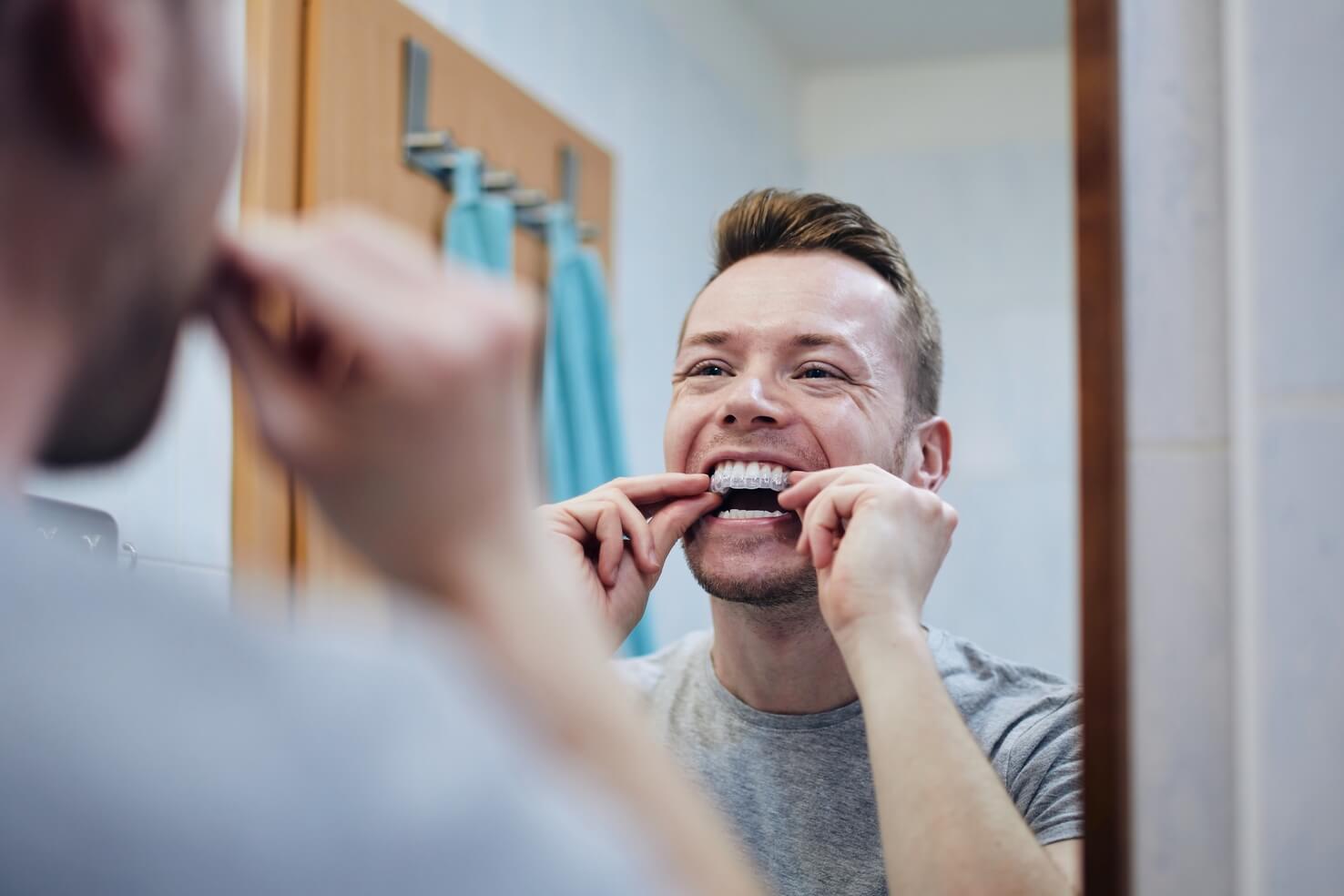
Straightening your teeth is not something you have to do as a teenager. Adults can have orthodontic treatment too, and increasingly discreet options mean treatment does not necessarily involve wearing visible metal braces.
For adults who would like to improve the alignment of their teeth without dramatically changing their everyday appearance, Invisalign clear aligners can be an attractive option.
The system uses a series of transparent, removable aligners to gradually move the teeth towards their planned positions. Because the aligners can be removed for eating, drinking and cleaning your teeth, they can also fit conveniently around work, social occasions and family life.
If you are considering Invisalign for adults, here is what you need to know about how treatment works, who may benefit and what to expect.
Why Are More Adults Choosing Invisalign?
There are many reasons someone may decide to straighten their teeth later in life.
Perhaps you never had orthodontic treatment when you were younger. Your teeth may have moved after previous braces, or a crowded or uneven smile may simply be something you have become increasingly conscious of.
The NHS confirms that adults can undergo orthodontic treatment, although treatment for those aged 18 and over will usually need to be paid for privately.
Invisalign can appeal particularly to adult patients because it combines orthodontic treatment with a relatively discreet appearance.
Clear and Discreet
Instead of metal brackets and wires, Invisalign uses transparent aligners that fit closely over the teeth.
They are not completely invisible, and some patients may require small tooth-coloured attachments to help particular movements, but they are generally much less noticeable than traditional metal braces.
For adults attending meetings, working with customers or simply preferring a subtle treatment, this can be an important advantage.
Removable for Eating
Invisalign aligners are removed when eating, meaning there are fewer restrictions on the types of food you can enjoy compared with fixed braces.
After eating, however, it is important to clean your teeth before putting your aligners back in.
Easier Access for Cleaning
Because the aligners are removable, you can brush and clean between your teeth normally.
Maintaining good oral health remains essential throughout orthodontic treatment. The NHS advises that orthodontic treatment should be accompanied by careful oral hygiene and regular dental care to minimise the risk of decay and gum problems.
Designed Around Your Smile
Each Invisalign treatment plan is created for the individual patient.
At Staina House Dental Practice, digital technology is used to create a 3D representation that can demonstrate how your teeth could look following treatment.
This helps you understand the proposed tooth movements before beginning your Invisalign journey.
What Can Invisalign Treat?
Clear aligners can be used for a variety of orthodontic concerns, although suitability depends on the individual case.
Treatment may potentially address:
- Crowded or overlapping teeth
- Gaps between teeth
- Teeth that have moved following previous orthodontic treatment
- Some overbite or underbite problems
- Certain crossbites
- General tooth alignment
Not every orthodontic problem is best treated with Invisalign. More complex tooth or jaw movements may require a different approach.
That is why an assessment is important. Your dentist needs to examine your teeth, gums and bite before deciding whether clear aligners are appropriate.
How Does Invisalign Treatment Work?
The Invisalign process is carefully planned rather than simply providing a series of generic trays.
1. Consultation and Assessment
Your first stage is a consultation to discuss what you would like to change about your smile.
Your dentist will assess your teeth and overall oral health and determine whether clear aligners for adults are appropriate for your needs.
Any active dental or gum-health problems may need to be addressed before orthodontic treatment begins.
2. Digital Scanning and Treatment Planning
Invisalign uses digital scanning technology to capture the position of your teeth.
Staina House uses iTero digital technology to produce a 3D representation of the smile and help plan treatment.
Invisalign’s ClinCheck treatment-planning software is then used by the provider to plan a customised sequence of tooth movements.
3. Your Clear Aligners Are Produced
Once the treatment plan has been agreed, your customised Invisalign aligners are manufactured.
Each set is designed to make controlled movements before you progress to the next stage.
4. Wear Your Aligners as Directed
Staina House advises patients to wear their Invisalign aligners for approximately 20–22 hours each day, removing them for eating, drinking where appropriate, brushing and flossing.
Consistency matters.
Because Invisalign is removable, the treatment relies on you wearing your aligners for the recommended amount of time. Frequently leaving them out can affect progress.
5. Attend Regular Reviews
You will need regular appointments so that your dentist can check how your teeth are moving and make sure treatment is progressing as planned.
Staina House schedules check-ups every few weeks during Invisalign treatment.
Your individual schedule will depend on your treatment plan.
How Long Does Invisalign Take for Adults?
There is no single Invisalign treatment time that applies to everybody.
The length of treatment depends on factors including:
- How much movement is required
- The complexity of your bite
- The number of teeth being moved
- How consistently you wear the aligners
- Whether additional refinement aligners are needed
Minor alignment may require a relatively short course, while more complex treatment can take considerably longer.
Your dentist will give you a personalised estimate once your teeth have been assessed and your digital treatment plan created. Invisalign itself states that treatment plans vary between patients.
Does Invisalign Hurt?
You may experience pressure or mild tenderness when changing to a new set of aligners. This is associated with the controlled forces being used to move your teeth.
For most patients, the sensation settles as they become accustomed to each new aligner.
Clear aligners do not have the metal brackets or wires used in conventional fixed braces, although their edges or any attachments can initially feel unfamiliar.
If you experience persistent pain or anything that concerns you during treatment, contact your dental practice rather than simply waiting until your next review.
How Much Does Invisalign Cost?
One of the most common questions about Invisalign in Garstang is how much treatment costs.
There is no universal price because the cost depends on the complexity and length of treatment and the number of aligners required. Invisalign confirms that its providers determine the cost based on the individual case.
Staina House similarly explains that more complex dental treatments may have variable fees and that an examination allows the dentist to provide a more accurate treatment cost after assessing the individual circumstances. Its current published fee list does not specify a fixed price for Invisalign.
When comparing costs, ask what your proposed treatment includes, such as reviews, scans, refinement aligners and retainers.
What Happens After Invisalign?
Finishing your final aligner does not mean your orthodontic care is finished.
Teeth have a natural tendency to move, so retainers are required after orthodontic treatment to help maintain their new positions. Invisalign states that patients need retainers following treatment, and NHS guidance similarly emphasises retention after teeth straightening.
Follow your dentist’s instructions carefully regarding how and when your retainers should be worn.
You should also continue to:
- Brush twice daily using fluoride toothpaste
- Clean between your teeth
- Attend regular dental examinations
- Visit your hygienist when recommended
- Keep retainers clean and stored safely
Looking after your teeth after Invisalign is just as important as caring for them during treatment.
Frequently Asked Questions
Am I too old for Invisalign?
There is no general upper age limit for adult orthodontic treatment. Suitability depends more on your teeth, gums, bite and overall oral health than your age.
Can I eat normally with Invisalign?
Yes, because the aligners are removed for meals. You should clean your teeth before replacing them and follow your dentist’s advice about drinks while wearing aligners.
Do I have to wear Invisalign all day?
For treatment to progress as planned, Staina House recommends wearing the aligners for 20–22 hours per day.
Will I need a retainer afterwards?
Yes. Retainers are an important part of maintaining the result after Invisalign or any other orthodontic treatment.
Start Your Invisalign Journey in Garstang
For adults who want straighter teeth without conventional visible braces, Invisalign can provide a discreet and convenient treatment option.
At Staina House Dental Practice in Garstang, patients considering adult teeth straightening can receive an assessment, digitally planned treatment and regular reviews throughout their Invisalign journey.
To find out whether Invisalign is suitable for you, contact Staina House Dental Practice on 01995 605707 to arrange a consultation.
